Behind the Mask: Demystifying the Tools and Technology Your Dentist Uses
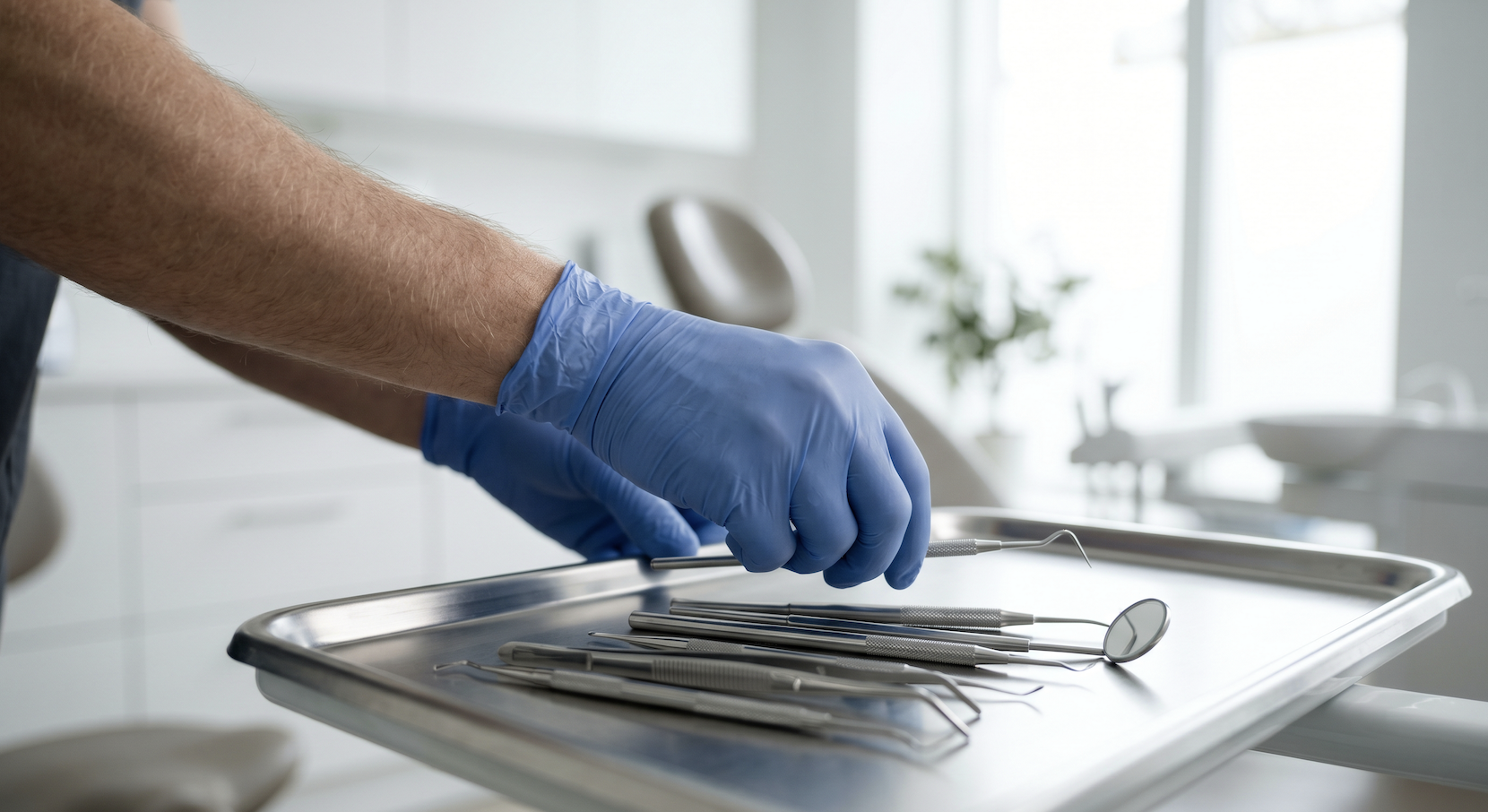
Walking into a dental clinic can sometimes feel like stepping onto the set of a science fiction film. You sit back in a large,complex chair. A bright light shines down from above. You hear the hum of mysterious machinery, and you see a metal tray covered in unusual,sharp-looking instruments.
For many people, this unfamiliar environment triggers immediate anxiety. Human beings naturally fear what they do not understand. When you do not know what a specific tool does or why the dentist needs to use it, your imagination often assumes the worst.
We believe that knowledge is the ultimate cure for fear. When you understand the specific purpose behind every tool, the clinical environment transforms from intimidating to fascinating. Let us pull back thecurtain and demystify the common tools and technology you encounter during a routine check-up.
The Mouth Mirror: Our Most Essential Tool
The mouth mirror is the simplest tool on our tray, yet it is arguably the most important. It consists of a small, round mirror attached to a long metal handle.
Your mouth is a dark, cramped space. Teeth have multiplesurfaces, and many of these surfaces face backward toward your throat or inward toward your tongue. We cannot physically contort our heads to see the back of your upper molars.
The mouth mirror solves this problem. It allows us to viewthe hidden sides of your teeth indirectly. Furthermore, the mirror serves as a powerful tool to reflect and redirect the bright overhead light into the darkest corners of your mouth. Finally, we use the smooth back of the mirror togently hold your tongue or cheek out of the way, ensuring we have a clear, safe view of the area we need to examine.
The Dental Explorer (The Sickle Probe)
The dental explorer, often called a sickle probe, looks slightly intimidating. It is a thin metal hand instrument with a sharp, curved hook at the very end.
Despite its sharp appearance, we do not use the explorer to cause pain. We use it as a highly sensitive tactile tool. Enamel is incredibly hard and smooth. When tooth decay begins, the enamel softens and becomes slightly sticky.
We use the delicate tip of the explorer to gently glide over the grooves and fissures of your teeth. If the tip slides smoothly, the enamel is healthy. If the tip catches or feels slightly sticky in a groove, it alerts us to the presence of early tooth decay. The explorer also helps us gently measure the depth of the pockets around your gums, which is a crucial indicator of gum disease.
The Saliva Ejector (The Suction)
The saliva ejector is the long, flexible plastic tube that hangs over your lower lip. You will recognise it by the constant, low-pitched hissing sound it makes.
During a dental procedure, your mouth naturally produces excess saliva. We also use small water sprays to wash away debris and keep our instruments cool. If we did not remove this liquid, it would pool at the back of your throat and make you feel like you were choking.
The saliva ejector provides a gentle, continuous suction. It acts like a tiny vacuum cleaner, constantly removing saliva and water from your mouth. This keeps the working area completely dry, which is essential for placing modern white fillings, and it ensures you remain comfortable and can breathe easily throughout the appointment.
The Ultrasonic Scaler
If you have ever had a professional cleaning, you have experienced the ultrasonic scaler. This tool looks like a small metal wand that constantly sprays a fine mist of water. It emits a distinct, high-pitched humming or squeaking noise.
Even with excellent brushing, plaque hardens into a substance called tartar, or calculus. Tartar bonds to your enamel like cement. You cannot remove it with a toothbrush at home.
The ultrasonic scaler uses high-frequency vibrations to literally shatter the hard tartar right off your teeth. The vibrations are so fast that they create tiny, energetic bubbles in the water spray. These bubbles implode against the tartar, breaking it apart quickly and efficiently. The constant water spray also cools the tip of the instrument and flushes the broken debris out from under your gum line.
Digital Radiographs (X-Rays)
We cannot see through solid bone or tooth enamel with our naked eyes. Much of the crucial structures of your mouth hide out of plain sight. Decay often starts between teeth where they touch, and infections start deep at the tip of the tooth root inside the jawbone.
Digital X-rays allow us to see through the hard tissues. They are an indispensable diagnostic tool. Without them, we would be guessing about your internal oral health.
Many people worry about radiation from X-rays. Modern digital X-ray technology is incredibly safe. It requires a tiny fraction of the radiation used by the old, traditional film X-rays. In fact, you receive more background radiation from a short commercial aeroplane flight than you do from a standard set of digital dental X-rays.
The Intraoral CameraThe intraoral camera is one of the greatest educational tools we possess. It is a tiny, high-definition digital camera mounted on the end of a wand, about the size of a pen.
We use this wand to take highly detailed, magnified photographs of the inside of your mouth. We instantly display these images on a large monitor directly in front of your chair.
This technology completely changes the patient experience. Instead of just taking our word for it, you can actually see exactly what we see. We can show you the microscopic crack in your old filling, the tartar building up behind your lower teeth, or the early signs of gum inflammation. Seeing the problem with your own eyes helps you understand your oral health and make confident decisions about your care.
Education Builds Trust
At Happy Smiles Dental Care, we believe that transparency is the foundation of excellent healthcare. We never want you to feel confused or intimidated by the tools we use.
We take the time to explain every instrument before we bring it near your mouth. If you ever feel nervous, you simply have to ask us what a tool does, and we will gladly demonstrate it for you.
Providing a genuinely happy dental experience means removing the fear of the unknown. We empower you with knowledge so you can relax, feel safe, and take an active, informed role in protecting your smile.